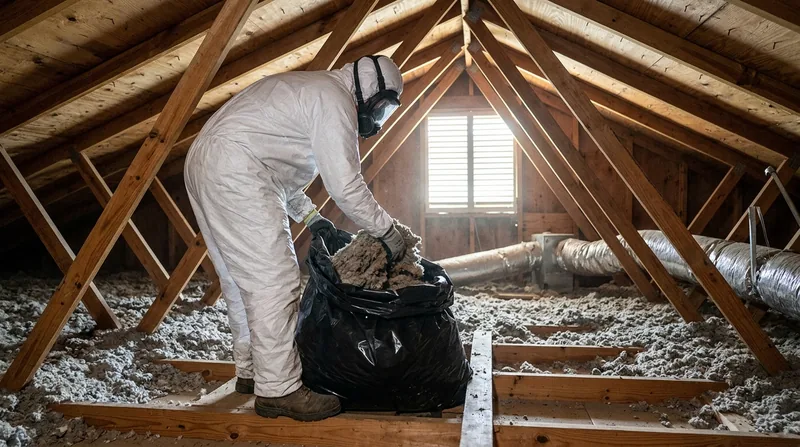




Palm Bay's housing stock is dominated by single-story concrete block homes built across the Port Malabar grid since the 1960s, nearly all sitting on slab with vented attics that trap heat year-round in Florida's cooling-dominated climate. These attics, packed with old fiberglass or cellulose insulation, absorb humidity from the Space Coast air and fail after decades of thermal cycling and moisture exposure. When insulation removal in Palm Bay becomes necessary, it's almost always because the existing material has degraded, settled, or absorbed moisture that compromises its R-value and invites mold growth in the living space below. We remove failed insulation completely, bag and haul it out, and leave your attic floor clean and ready for new spray foam or blown-in material. This work is the essential first step in any attic retrofit, and it's the only credible way to start fresh when old insulation has failed.
Why Attic Insulation Fails in Palm Bay's Hot, Humid Climate
Palm Bay sits in IECC Climate Zone 2A, a hot and humid region where air conditioning runs nearly year-round and summer cooling loads follow attic temperature upward. Vapor drive in this climate runs from the hot, wet outdoor air toward the cool conditioned interior, and any gap in the attic floor or penetration around ductwork, top plates, or soffits pulls moist air directly into the living space. Old fiberglass insulation, which loses effectiveness as it settles and becomes damp, cannot stop that moisture movement. Cellulose, which absorbs water readily, becomes heavy and compacted over time and loses its insulating value. The result is higher cooling bills, inconsistent room temperatures, and humidity that climbs inside the home even as the AC runs.
- Settled fiberglass loses R-value as the material compacts and gaps open around ductwork and penetrations.
- Cellulose absorbs moisture from the humid Space Coast air and becomes heavy, compacted, and ineffective.
- Old insulation traps heat in the attic, driving up cooling load and electric bills every summer.
- Moisture-laden insulation creates conditions where mold can develop in the attic and spread into living spaces.
- Failed insulation often hides air leaks around electrical penetrations, duct boots, and soffit vents that pull warm, humid air into the attic.
When insulation reaches this state, removal and replacement is the only solution that delivers reliable performance and lasting comfort.
Key info: Brevard County humidity stays above 60 percent for most of the year. Old insulation in Palm Bay, West Melbourne, and Melbourne attics absorbs that moisture and settles under its own weight, losing 30 to 50 percent of its R-value within 10 to 15 years. Removal and replacement with closed cell spray foam stops vapor drive at the source and delivers lasting performance.
For more information on the insulation solutions that work best after removal, see our attic spray foam insulation page.
How We Remove Old Insulation and Prepare Your Attic for New Material
Insulation removal is a methodical job that requires the right equipment and a systematic approach. We set up mechanical ventilation to control dust and odors during the work, remove all old material by hand or with a vacuum system depending on the type and condition, bag it for proper disposal, and leave the attic floor clean and ready for inspection or new installation. The work takes a full day on a typical 1,500-square-foot attic, and we coordinate timing with any new insulation installation to minimize your downtime and disruption.
- We establish mechanical ventilation and seal off the living space to contain dust and odors during removal.
- We remove all old insulation material, including settled fiberglass, cellulose, or failed foam, by hand or with equipment.
- We inspect the attic floor and framing for damage, moisture, or structural issues that must be addressed before new insulation goes in.
- We bag all removed material for proper disposal according to local waste regulations.
- We leave the attic floor clean, ready for new spray foam, blown-in insulation, or air sealing work.
The result is a blank slate where your new insulation can perform at its rated R-value from day one.
Real example: A homeowner in Bayside Lakes discovered 6 inches of settled cellulose in her attic, down from the original 12 inches installed in 1998. We removed all of it, found moisture staining on the roof decking near a soffit vent, and left the attic ready for closed cell spray foam installation that sealed the vent and stopped the air leak. Her summer cooling bills dropped 18 percent in the first full month.
Once removal is complete, closed cell spray foam insulation is the most effective choice for Palm Bay's climate because it controls moisture and air leakage at the same time.
Insulation Removal Methods in Palm Bay
| Method | Description | Best for |
|---|---|---|
| Hand removal with vacuum collection | Crew removes insulation by hand into bags using a HEPA-filtered vacuum system to control dust in the home. | Settled fiberglass or cellulose in occupied homes where dust control is critical. |
| Pneumatic removal (blower truck) | Loose-fill material is vacuumed out with a truck-mounted blower and collected in a sealed bin for disposal. | Large volumes of settled cellulose or fiberglass in vacant homes or new construction cleanout. |
| Failed foam removal and disposal | Spray foam that has failed or was applied incorrectly is cut out, bagged, and removed; substrate is cleaned. | Bad foam jobs or foam that has absorbed moisture and lost its seal. |
| Attic floor decking removal and replacement | Damaged or mold-affected plywood is removed and replaced before new insulation is installed. | Attics with rot, moisture damage, or structural issues that must be corrected first. |
Every job starts with a walk-through to assess the material type, volume, condition, and any structural or moisture issues that must be addressed before new insulation goes in.
Insulation Removal Cost in Palm Bay: What to Expect
Insulation removal in Palm Bay typically starts at $950 for a standard 1,500-square-foot attic with settled fiberglass or cellulose. The final cost depends on the volume of material, the type (fiberglass settles less densely than cellulose and removes faster), the condition (wet or moldy material takes longer), and attic access (tight soffits or low clearance add time). A two-story home with a large attic or an attic packed with old foam may run $1,500 to $2,200. Getting a free on-site estimate is the only way to know the exact scope and price for your home, because every attic is different.
Factors that move the cost up include:
- High volume of compacted cellulose or heavy, damp insulation that requires pneumatic removal equipment.
- Structural or moisture damage to the attic floor decking that must be repaired before new insulation.
- Tight attic access or low clearance that limits crew movement and slows removal.
- Failed spray foam or contaminated material that requires careful handling and special disposal.
- Extensive ductwork or mechanical systems that must be worked around or temporarily moved.
We provide a written estimate with scope, material volume, labor, and disposal cost clearly stated so there are no surprises. For detailed pricing guidance and a full breakdown of what affects cost in your area, visit our pricing page.
Insulation Removal Near Me: What Palm Bay Homeowners Should Know When Hiring a Contractor
Insulation removal is a straightforward job, but hiring the right contractor matters because the work sets the stage for everything that comes next. Before you call, know that spray foam and insulation contractors are not regulated the same way across Florida cities, so licensing and registration vary by municipality. Permitting for insulation removal is rare unless structural work is involved, but always check with your local building department to confirm what applies at your address. If you live in a master-planned community, check your HOA rules, though they rarely govern attic work. The key is to hire a contractor who is fully insured, provides a detailed written estimate before starting, and sets clear expectations for dust control and cleanup.
When evaluating contractors in Palm Bay and the surrounding areas:
- Ask for proof of current insurance coverage and verify it with the carrier before the work begins.
- Get at least two written estimates that clearly state the material type, volume, labor scope, and disposal method.
- Ask how the contractor will control dust and odors during removal and what ventilation will be used.
- Confirm the timeline and whether removal is being done in preparation for new insulation installation.
- Check references from recent jobs in Palm Bay, West Melbourne, or Melbourne to verify quality and reliability.
- Avoid contractors who quote a price over the phone without an on-site look or who promise the work in a few hours on a large attic.
A contractor who takes time to understand your attic condition, explains what he finds, and provides a clear estimate is the one you can trust to do the job right. Call us at (321) 341-3084 for a free estimate with no obligation.
For more information and to schedule your free consultation, contact us today.
Insulation Removal in Palm Bay: Pricing Guide
| Service | Price | Details |
|---|---|---|
| Standard attic removal (1,200-1,800 sq ft) | Starting at $950 | Hand removal with vacuum collection of settled fiberglass or cellulose, bagging, and disposal included. |
| Large attic or heavy cellulose (2,000+ sq ft) | Starting at $1,500 | Pneumatic removal equipment used for high-volume compacted material; truck-mounted vacuum collection and haul-away. |
| Failed foam removal or structural repair | Starting at $1,200 | Removal of bad spray foam installation or damaged decking; substrate inspection and preparation for new material. |
| Travel and setup | Included | No mileage charge or service call fee in Palm Bay and surrounding areas throughout Greater Brevard County. |
| Written estimate | Free | On-site inspection with scope, material volume, labor, and disposal clearly detailed; response within 24 hours. |
Indicative pricing, the exact cost depends on square footage, finish, and site access. Free personalized estimate within 24h at (321) 341-3084.


