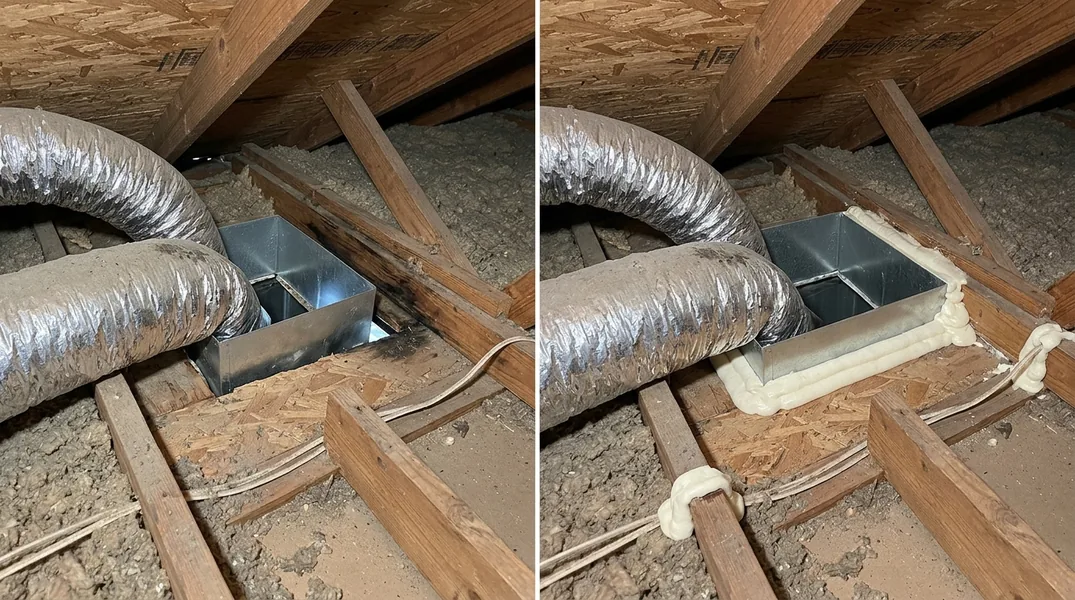
Understanding Air Sealing vs. Full Foam Insulation
When it comes to improving your attic's energy efficiency, you have two main pathways: air sealing alone or investing in Attic Spray Foam Insulation. These aren't necessarily competing solutions, but rather different points on the spectrum of attic performance. Air sealing focuses on closing gaps, cracks, and penetrations where conditioned air leaks out, while full foam insulation provides both an air barrier and thermal resistance in one application.
Air sealing is the foundation of any energy-efficient attic. Even the best traditional insulation loses effectiveness if warm or cool air is escaping through unsealed holes around electrical wiring, plumbing vents, recessed lights, and roof penetrations. Many homeowners in Palm Bay discover that their energy bills spike because their attic isn't properly sealed, not because they lack insulation. Full foam insulation, on the other hand, eliminates the need for a separate air sealing step by creating a continuous, seamless barrier that seals and insulates simultaneously. Understanding which approach fits your situation depends on your home's current condition, budget, and long-term energy goals.
Spray Foam Insulation R-Value Per Inch: What You Need to Know
One of the most important metrics in insulation performance is the R-value, which measures thermal resistance. The higher the R-value, the better the insulation resists heat transfer. When comparing Closed Cell Spray Foam Insulation and Open Cell Spray Foam Insulation, you'll notice a significant difference in their spray foam insulation R-value per inch. Closed cell foam typically delivers 6.0 to 7.0 R-value per inch, while open cell foam ranges from 3.5 to 3.6 R-value per inch. This means closed cell foam requires less thickness to achieve the same thermal performance, though it comes at a higher cost.
For homeowners in Palm Bay, understanding these differences helps you make an informed decision about how thick should spray foam be for your specific needs. If you choose closed cell foam, you might only need 5 to 6 inches to meet Florida's recommended R-value requirements. Open cell foam, while more affordable, would require 10 to 12 inches to achieve comparable performance. Both options provide superior air sealing compared to traditional fiberglass or cellulose, which means less air movement through your attic and more consistent indoor temperatures year-round.
R-Value Requirements by State: Florida's Standards
Florida's climate presents unique insulation challenges. Unlike northern states that require R-values of 49 to 60 for attics, Florida's R-value requirements by state are more modest but still important. The U.S. Department of Energy recommends R-30 to R-38 for attics in warm climates like ours, though some energy-conscious homeowners opt for R-49 to maximize efficiency and reduce long-term cooling costs. Since Florida's hot, humid climate means your air conditioning runs heavily for much of the year, even modest improvements in attic insulation can translate to meaningful savings on your energy bills.
The reason Florida's standards differ is rooted in climate science. In northern states, the primary concern is preventing heat loss during winter. In Florida, we're primarily fighting heat gain during the cooling season. However, this doesn't mean you should settle for minimal insulation. A well-insulated attic with proper air sealing reduces the workload on your HVAC system, extends equipment life, and creates more comfortable living spaces. When you're evaluating whether to pursue simple air sealing or full foam insulation, consider that full spray foam delivers both the required R-value and the critical air sealing that Florida homes need to stay cool and comfortable.
How Thick Should Spray Foam Be: Finding the Right Depth
Determining how thick should spray foam be depends on several factors, including your target R-value, the type of foam you choose, and your attic's current condition. If you're installing closed cell foam to achieve R-38, you'll need approximately 5.5 to 6 inches. For open cell foam reaching the same R-value, you'd need 10 to 11 inches. However, thickness isn't just about hitting an R-value number. The thickness also affects the foam's ability to create a continuous air barrier, which is equally important for energy efficiency.
Many homeowners overlook the fact that undersizing spray foam can leave small gaps and voids that compromise performance. Professional installers understand that proper application thickness ensures complete coverage, especially around irregular attic spaces, roof penetrations, and mechanical systems. At Palm Bay Spray Foam Insulation, we assess your attic's unique layout and recommend a thickness that balances your energy goals with budget constraints. Thicker foam generally provides better long-term value because it reduces the likelihood of future energy losses and minimizes the need for supplemental insulation.
Insulation Tax Credits and Rebates in Florida
One of the most overlooked advantages of upgrading your attic insulation is the potential for financial incentives. The federal insulation tax credit allows homeowners to claim up to 30 percent of the cost of qualifying energy-efficient home improvements, including spray foam insulation. This credit applies to both closed cell and open cell applications, making it an excellent time to invest in your home's energy performance. Additionally, many utility companies in Florida offer insulation rebates to customers who upgrade their attic insulation, which can further reduce your out-of-pocket expenses.
Before committing to any insulation project, it's worth investigating both federal and local incentive programs. Some rebates require pre-approval or specific installation methods, so working with a knowledgeable contractor is essential. When you contact Palm Bay Spray Foam Insulation at (321) 341-3084 for a free estimate, our team can discuss available tax credits and rebates that apply to your situation. These incentives can dramatically improve the return on investment for your attic upgrade, making full foam insulation more affordable than many homeowners realize.
Attic Spray Foam Insulation Cost in Palm Bay: What to Budget
When evaluating the cost of spray foam insulation, it's important to compare not just the upfront installation expense but the long-term energy savings and durability. Closed cell spray foam typically ranges from $1.50 to $2.50 per board foot installed, while open cell foam runs $0.50 to $1.00 per board foot. For a typical 1,500 square foot attic, closed cell foam might cost $4,500 to $7,500, while open cell could range from $1,500 to $3,000. These figures vary based on attic accessibility, existing insulation removal, and local labor rates in Palm Bay.
The pricing for your specific project depends on multiple factors beyond just the foam type and thickness. If your attic requires extensive air sealing work, mold remediation, or removal of old insulation, these services add to the overall cost. However, the energy savings typically offset the investment within 5 to 10 years, and spray foam insulation lasts 50+ years without settling or degrading. When you factor in the insulation tax credit and potential utility rebates, the net cost becomes significantly more attractive. To get an accurate quote tailored to your home's needs, reach out to our team for a detailed assessment and free estimate.
Making Your Decision: Air Sealing, Foam, or Both
The choice between air sealing alone and full foam insulation ultimately depends on your home's current condition, your budget, and your energy efficiency goals. If your attic already has adequate traditional insulation but has noticeable air leaks, targeted air sealing with caulk, weatherstripping, and spray foam sealant might be sufficient. However, if your attic is underinsulated, lacks proper air sealing, or you're planning a major renovation, full foam insulation offers superior, long-lasting performance in one application.
Many homeowners find that a hybrid approach works best for their situation. Starting with thorough air sealing and then adding spray foam insulation in critical areas, like above the attic access or around mechanical systems, can provide excellent results at a moderate cost. Whatever approach you choose, the key is taking action. An uninsulated or poorly sealed attic can account for up to 25 percent of your home's heat loss or gain, directly impacting your comfort and energy bills. If you're ready to explore your options, contact Palm Bay Spray Foam Insulation today at (321) 341-3084 or request a free estimate to discuss the best solution for your attic.
Looking for a professional spray foam insulation contractor in Palm Bay? Palm Bay Spray Foam Insulation responds fast for all your spray foam insulation needs.
Get a Free Quote