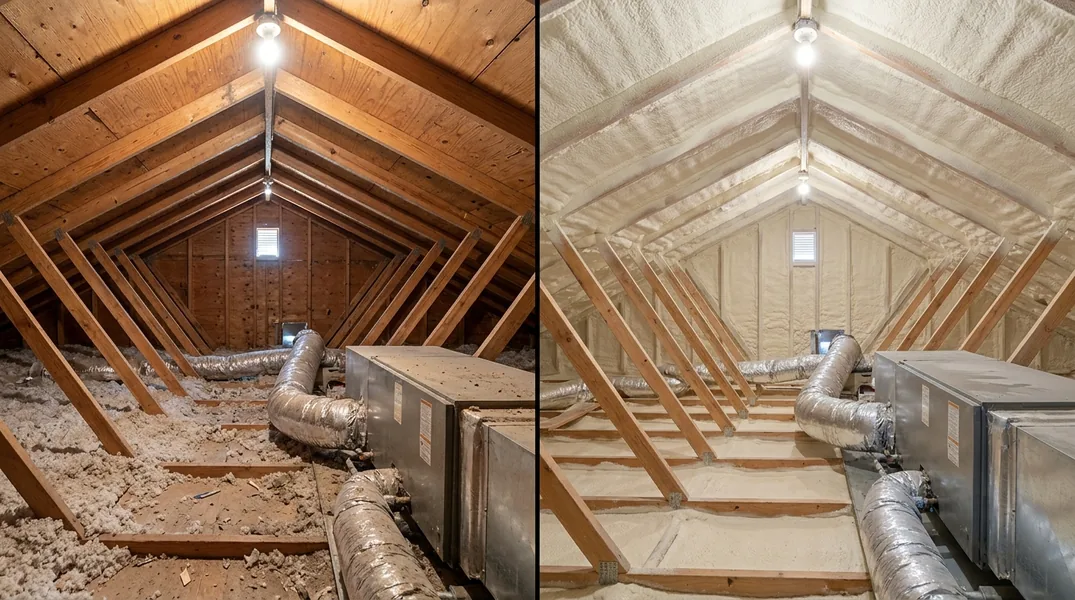
Why New Construction in Bayside Lakes Needs Superior Insulation
Building a new home in Bayside Lakes is an exciting opportunity to get insulation right from the start. Unlike retrofit projects where contractors work around existing structures, new construction allows you to install the best insulation for attic spaces before drywall goes up and walls are sealed. This is your chance to invest in energy efficiency, comfort, and long-term savings that will benefit your family for decades.
The insulation choices you make during the framing stage directly impact your home's heating and cooling costs, indoor air quality, and structural durability. Palm Bay experiences hot, humid summers and mild winters, which means your attic insulation must handle temperature swings and moisture challenges. Many homeowners in the area are discovering that traditional fiberglass batts and blown-in cellulose simply don't perform as well as modern spray foam solutions when it comes to air sealing and moisture control.
Spray Foam vs. Blown-In Insulation: The Key Differences
When comparing spray foam vs blown in insulation, the differences become clear once you understand how each material works. Blown-in insulation, whether made from cellulose or fiberglass, consists of loose fibers that are pneumatically installed into wall cavities and attic spaces. While blown-in products offer decent R-value per inch, they have a critical weakness: they don't seal air leaks. Air can flow around the fibers, bypassing the insulation entirely and carrying conditioned air out of your home.
Attic Spray Foam Insulation works differently. The material expands as it's applied, filling every cavity, crack, and crevice. It hardens into a solid, air-tight barrier that simultaneously insulates and air-seals. This dual function means you're not just slowing heat transfer; you're stopping air infiltration before it happens. For homeowners in Palm Bay where summer cooling costs can be substantial, this air-sealing advantage translates to real energy savings month after month.
Another practical difference involves moisture management. Blown-in insulation can absorb and trap moisture, especially in humid climates like ours. Over time, this moisture can degrade the insulation's effectiveness and create conditions for mold growth. Spray foam, particularly Closed Cell Spray Foam Insulation, is inherently moisture-resistant and actually helps protect your home's structure from water damage.
Spray Foam vs. Fiberglass: Which Performs Better in Florida Attics
Fiberglass batts have been the standard for decades, and for good reason: they're affordable and relatively easy to install. However, when you compare spray foam vs fiberglass in the context of Florida's climate, spray foam emerges as the superior choice for new construction. Fiberglass batts rely on proper installation and spacing to achieve their rated R-value, but even perfectly installed batts don't seal air leaks. Gaps between batts, around pipes, and along framing members allow hot air to bypass the insulation.
Fiberglass also settles over time, especially in attics where temperature fluctuations are extreme. In Palm Bay, attic temperatures can exceed 140 degrees Fahrenheit in summer. This thermal cycling causes fiberglass to shift and compress, reducing its effectiveness. Spray foam doesn't settle. It maintains its R-value and air-sealing properties for the life of your home, which means your insulation investment continues to pay dividends year after year without degradation.
The moisture performance difference is equally important. Fiberglass absorbs moisture readily, and once damp, it loses insulating value and becomes a breeding ground for mold and mildew. Spray foam repels moisture, protecting both the insulation and the structural members of your home. For new construction where you want to build with confidence, spray foam provides the durability and performance that fiberglass simply cannot match.
Understanding Spray Foam vs. Cellulose for Attic Insulation
Cellulose is often marketed as an eco-friendly blown-in insulation option, and while it does have environmental advantages as a recycled material, it shares many of the same performance limitations as fiberglass blown-in products. When evaluating spray foam vs cellulose, the comparison centers on moisture sensitivity, air sealing, and long-term durability. Cellulose is highly hygroscopic, meaning it readily absorbs moisture from humid air. In Florida's climate, this is a serious concern.
Cellulose also requires chemical treatments to resist fire and pest damage. Over time, these treatments can degrade, particularly in hot attics. Additionally, cellulose doesn't air-seal the way spray foam does. You still face the problem of air leakage around framing, through gaps, and around penetrations. For new construction in Bayside Lakes where you're building for the long term, spray foam offers superior performance in moisture resistance, air sealing, and maintenance-free durability. If environmental impact is important to you, remember that the energy savings from spray foam's superior insulation and air-sealing properties create a positive environmental return over the life of the home.
Open Cell vs. Closed Cell Spray Foam: Which Is Best for Your Attic
Once you've decided that spray foam is the right choice for new construction in Bayside Lakes, the next decision is whether to use open cell or closed cell foam. Open Cell Spray Foam Insulation is lighter, less expensive, and offers good insulation value at approximately 3.6 R-value per inch. It's also more flexible and can absorb sound, making it attractive for interior applications. However, open cell foam is permeable to moisture and air, which means it doesn't provide the same air-sealing or moisture-blocking benefits as closed cell foam.
Closed cell spray foam is denser, more rigid, and provides superior R-value at approximately 6.0 to 6.5 per inch. More importantly, closed cell foam is completely impermeable to moisture and air. It creates an absolute barrier against humidity and infiltration, making it the best insulation for attic spaces in humid climates. For new construction attics in Palm Bay, closed cell foam is typically the recommended choice because it protects your home from the moisture challenges that open cell foam cannot handle. While the upfront cost is higher, the performance benefits and long-term durability justify the investment.
Attic Spray Foam Insulation Cost in Palm Bay: What to Budget
Understanding the pricing for spray foam insulation helps you make an informed decision for your new construction project. Spray foam typically costs more per square foot than blown-in fiberglass or cellulose, ranging from $1.50 to $3.00 per board foot depending on foam type, thickness, and local market conditions. For a typical attic, this might represent a higher upfront investment compared to traditional insulation. However, this comparison misses the full financial picture.
When you factor in energy savings, spray foam's superior air-sealing means your HVAC system works less hard to maintain comfortable temperatures. Many homeowners see their cooling costs drop by 15 to 20 percent compared to homes insulated with fiberglass or blown-in products. Over 20 or 30 years, these savings often exceed the initial cost difference. Additionally, spray foam requires no maintenance, never settles, and doesn't need to be replaced or topped up as it ages. For new construction, you're making a one-time investment that provides superior performance for the entire life of your home. To understand the specific costs for your Bayside Lakes project and explore financing options, contact Palm Bay Spray Foam Insulation at (321) 341-3084 to request a free estimate.
Getting Professional Installation for Your New Construction Project
While spray foam insulation offers exceptional performance, proper installation is critical to achieving those benefits. This is not a DIY project. Professional installation ensures that foam is applied at the correct thickness, that all cavities are filled completely, and that the installation complies with building codes and manufacturer specifications. For new construction in Bayside Lakes, working with experienced spray foam contractors during the framing stage allows for optimal planning and execution.
Palm Bay Spray Foam Insulation specializes in new construction projects and understands the unique requirements of attic insulation in Florida homes. Our team coordinates with your builder and framing crew to ensure spray foam is applied at the right stage of construction, before drywall and roofing are finalized. We handle everything from Attic Spray Foam Insulation to Wall & Injection Foam Insulation, providing comprehensive solutions for your entire home. If you're building in Palm Bay and want to ensure your new home is built with the best insulation available, contact us today at (321) 341-3084 or visit our website at https://palm-bay-spray-foam.com to discuss your project with our team.
Looking for a professional spray foam insulation contractor in Palm Bay? Palm Bay Spray Foam Insulation responds fast for all your spray foam insulation needs.
Get a Free Quote