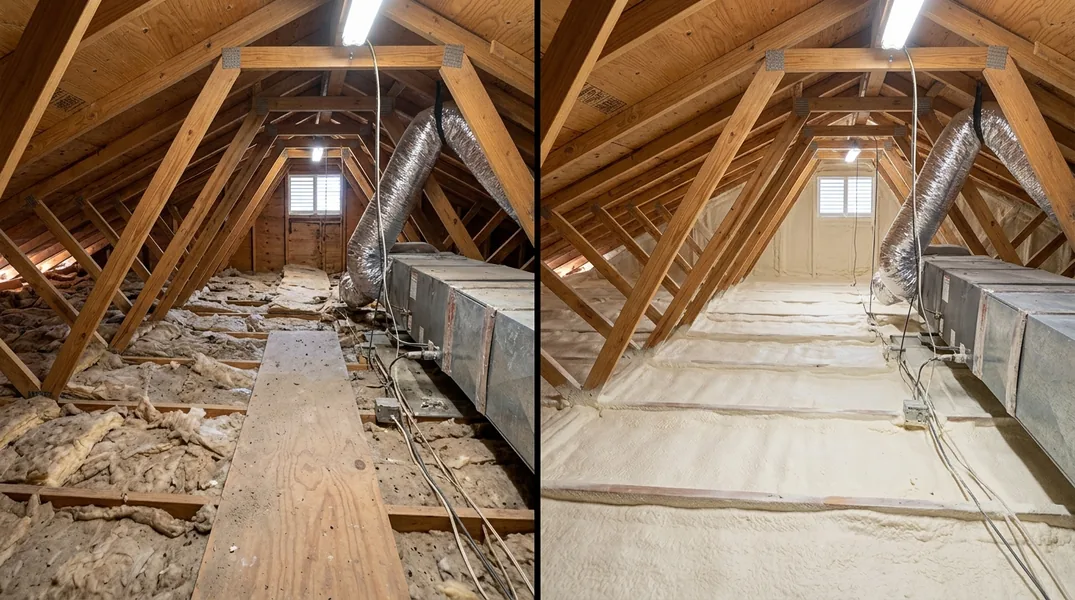
Understanding Spray Foam Insulation for Palm Bay Attics
When it comes to keeping your home comfortable and energy efficient in Palm Bay, attic insulation plays a critical role. The tropical climate here means your air conditioning system works overtime, and poor attic insulation can lead to significant energy waste and higher utility bills. Attic Spray Foam Insulation has emerged as one of the most effective solutions for homeowners seeking to improve their home's thermal performance and indoor comfort.
Unlike traditional fiberglass batts or blown-in cellulose, spray foam creates an air-tight seal that prevents conditioned air from escaping through gaps, cracks, and penetrations. This superior air sealing capability is especially valuable in Florida's humid climate, where moisture infiltration can compromise insulation effectiveness and encourage mold growth. Two primary types of spray foam dominate the market: open cell and closed cell. Understanding the differences between these options will help you make an informed decision that aligns with your home's needs and your budget.
What is Open Cell Spray Foam Insulation?
Open Cell Spray Foam Insulation features a structure where the cells are not completely enclosed. This design allows air and moisture to move through the material more freely. Open cell foam typically has an R-value of approximately 3.5 to 3.6 per inch, meaning you need more thickness to achieve the same insulation rating as closed cell foam. Despite the lower R-value per inch, open cell spray foam remains a popular choice for many homeowners because it offers several practical advantages.
One of the primary benefits of open cell foam is its cost effectiveness. It generally costs less per board foot than closed cell foam, making it an attractive option for budget-conscious homeowners. Additionally, open cell foam is lighter in weight and more flexible, which can make installation easier in certain attic configurations. The material also has good sound-dampening properties, which can help reduce noise transmission through your attic space. However, because it allows moisture penetration, open cell foam is best used in conditioned spaces where humidity is controlled by your home's HVAC system.
What is Closed Cell Spray Foam Insulation?
Closed Cell Spray Foam Insulation features cells that are completely enclosed and tightly packed together. This dense structure delivers superior insulation performance with an R-value of approximately 6.0 to 7.0 per inch, roughly double that of open cell foam. This means you can achieve your target R-value with less material thickness, which is particularly valuable in attics where space is limited or where you want to maximize the insulation value without significantly raising the roof height.
The closed cell structure makes this foam an excellent vapor barrier, which is a critical advantage in humid climates like Palm Bay. Because it resists moisture penetration, closed cell foam can be used in both conditioned and unconditioned spaces, making it more versatile for various attic configurations. The material also provides structural reinforcement to your roof deck and offers superior air sealing capabilities. The main trade-off is cost: closed cell foam typically runs 50 to 100 percent higher per board foot than open cell foam. However, many homeowners find the superior performance and moisture resistance justify the premium investment.
Sealed Attic Insulation: Why Air Sealing Matters in Florida
Sealed attic insulation using spray foam creates what's known as an unvented attic, which fundamentally changes how your attic interacts with your home's climate control system. In traditional vented attics, air can move freely between the attic and the outside environment, which allows hot, humid air to enter during summer months and escape during winter. This air exchange directly impacts your HVAC system's efficiency and can lead to moisture-related problems like mold growth and wood rot. By creating a sealed attic environment with spray foam, you eliminate these concerns and gain tighter control over your home's thermal envelope.
The benefits of a sealed attic insulation system extend beyond energy savings. When your attic is properly sealed and insulated with spray foam, it becomes part of your conditioned living space. This means the temperature and humidity levels in your attic remain consistent with the rest of your home, reducing strain on your air conditioning system. In Florida's hot, humid climate, this translates to lower cooling costs and improved comfort throughout your home. Additionally, a sealed attic reduces the likelihood of pest infiltration, protects stored items from temperature extremes, and can even improve indoor air quality by preventing outside air pollutants from entering your home.
Unvented Attic Spray Foam: The Modern Approach to Florida Homes
Unvented attic spray foam installation has become increasingly popular among Florida homeowners and builders because it directly addresses the challenges posed by our tropical climate. By applying spray foam directly to the underside of the roof deck, you create an unvented attic space that stays cool in summer and maintains consistent humidity levels year-round. This approach is particularly effective in Florida, where humidity control is just as important as temperature control.
When you choose an unvented attic design with spray foam, your insulation system must provide an effective vapor barrier to prevent moisture from accumulating inside the attic space. Closed cell spray foam excels at this task, though open cell foam can work in certain applications if properly ventilated through the soffit vents. The key is ensuring that your insulation system is designed and installed correctly to manage both heat and moisture. Professional installation is essential to achieve the performance benefits you're paying for, which is why working with experienced contractors in your area is crucial. If you're considering this upgrade for your Palm Bay home, contact Palm Bay Spray Foam Insulation at (321) 341-3084 for a consultation.
Attic Spray Foam Insulation Cost in Palm Bay: What to Budget
Understanding the pricing for attic spray foam insulation helps you make a financially sound decision for your home. Open cell spray foam typically costs between 40 to 60 cents per board foot, while closed cell foam ranges from 80 cents to over one dollar per board foot. For an average attic space of 1,500 square feet, open cell foam might cost between 6,000 to 9,000 dollars for a 3.5-inch application, while closed cell foam could range from 12,000 to 18,000 dollars or more for the same area. These figures vary based on your specific attic configuration, local labor costs, and the contractor you choose.
While closed cell foam costs more upfront, many homeowners view it as a long-term investment that pays dividends through energy savings and improved home comfort. The superior R-value means you achieve better insulation with less material, and the vapor barrier properties provide peace of mind in Florida's humid environment. To get an accurate estimate tailored to your home's specific needs, reach out to Palm Bay Spray Foam Insulation for a free estimate. Our team will assess your attic, discuss your goals, and provide transparent pricing so you can make the best decision for your situation.
Choosing the Right Spray Foam Type for Your Home
The decision between open cell and closed cell spray foam ultimately depends on your specific circumstances, priorities, and budget. If you're primarily concerned with cost and your attic will remain conditioned (meaning your HVAC system will maintain humidity levels), open cell foam may be sufficient. However, if you want maximum R-value per inch, superior moisture resistance, and the peace of mind that comes with a high-performance vapor barrier, closed cell foam is the better choice for most Palm Bay homes.
Your attic's current condition, ventilation setup, and your long-term plans for your home should all factor into your decision. A qualified contractor can evaluate these factors and make recommendations based on best practices for Florida homes. At Palm Bay Spray Foam Insulation, we work with homeowners to understand their needs and recommend the solution that delivers the best value. Whether you're dealing with an existing attic that needs improvement or planning a new construction project, we're here to help. Call us at (321) 341-3084 or request a free estimate today to discuss your attic insulation options. Our team has the expertise to ensure your investment in spray foam insulation pays off through years of improved energy efficiency and home comfort.
Looking for a professional spray foam insulation contractor in Palm Bay? Palm Bay Spray Foam Insulation responds fast for all your spray foam insulation needs.
Get a Free Quote