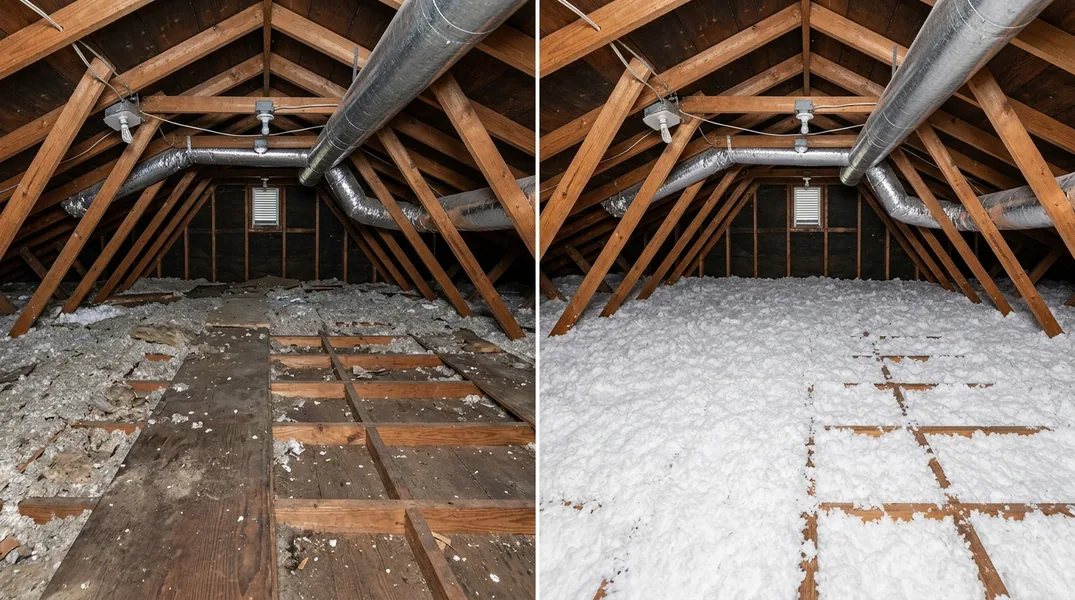
Why Port Malabar Concrete Block Homes Need Better Insulation
Port Malabar's distinctive concrete block construction offers durability and weather resistance, but it presents unique thermal challenges that many homeowners overlook. Concrete is a poor insulator on its own, meaning heat and cold transfer easily through the walls and into your living spaces. In Florida's hot, humid climate, this translates to higher air conditioning costs and uncomfortable indoor temperatures during peak summer months.
If you live in a concrete block home in or near Palm Bay, you've likely noticed that traditional fiberglass batts or blown-in cellulose don't perform as well as they do in wood-frame houses. The thermal bridging through concrete blocks creates pathways for conditioned air to escape, forcing your HVAC system to work harder. This is where Attic Spray Foam Insulation becomes a game-changer. By sealing air leaks and creating a continuous thermal barrier, spray foam addresses the root cause of energy loss in concrete block construction.
Is Spray Foam Insulation Worth It for Your Home?
The question of whether spray foam insulation is worth it depends on your priorities, budget, and long-term plans for your home. For homeowners in Palm Bay with concrete block construction, the answer is often yes. Spray foam delivers superior air sealing compared to traditional insulation methods, reducing energy consumption by 15 to 30 percent in many cases. Over time, these energy savings offset the higher upfront investment, particularly if you plan to stay in your home for several years.
Beyond energy efficiency, spray foam provides additional benefits that justify the cost. It strengthens your home's structural integrity, improves indoor air quality by blocking dust and allergens, and offers excellent moisture control in Florida's humid environment. For concrete block homes, where air infiltration is a persistent problem, spray foam represents a comprehensive solution that addresses multiple comfort and efficiency concerns simultaneously. The peace of mind that comes with a properly sealed attic and walls is valuable, especially when facing Closed Cell Spray Foam Insulation options that provide both insulation and structural reinforcement.
Is Spray Foam Insulation Safe? Understanding the Real Concerns
Safety concerns about spray foam insulation are legitimate, but they're often misunderstood or exaggerated. The primary safety issue involves isocyanates, which are chemical compounds used in spray foam manufacturing. During the application process, trained professionals follow strict protocols to minimize exposure. Once fully cured, spray foam poses no health risk to occupants because the chemical reaction is complete and the foam is inert.
The key to ensuring safety is working with a qualified, licensed contractor who understands proper application techniques and ventilation requirements. At Palm Bay Spray Foam Insulation, our team adheres to industry standards and manufacturer guidelines to protect both workers and homeowners. We use personal protective equipment, ensure adequate ventilation during installation, and allow proper curing time before occupants return to treated areas. If you have concerns about spray foam safety, discussing them with a professional during your free estimate is an excellent way to get answers tailored to your specific situation. Our experts can explain the application process, safety measures, and post-installation protocols in detail.
Spray Foam Off-Gassing: What You Need to Know
Spray foam off-gassing is a concern that deserves a straightforward explanation. Off-gassing refers to the release of volatile organic compounds (VOCs) after spray foam installation. This process occurs primarily during and immediately after application, as the foam cures and hardens. For the first 24 to 48 hours post-installation, some homeowners may notice a chemical smell in their attic or walls. This is normal and typically subsides as the foam fully cures.
The intensity and duration of off-gassing depend on several factors, including the type of foam used, ventilation in the treated space, and ambient temperature. Open Cell Spray Foam Insulation generally off-gasses more noticeably than closed-cell varieties, but both types are considered safe once cured. To minimize concerns, ensure your home is well-ventilated during and after installation, and follow your contractor's guidance regarding re-entry times. If you have respiratory sensitivities or chemical allergies, inform Palm Bay Spray Foam Insulation before your project begins so we can discuss the best approach for your situation.
Spray Foam Insulation Pros and Cons: A Balanced Overview
Like any home improvement investment, spray foam insulation has distinct advantages and drawbacks worth considering. The primary pros include exceptional air sealing (closing gaps as small as 1/8 inch), superior R-value per inch of thickness, moisture resistance, and long-term durability. Spray foam also reduces noise transmission and can improve structural rigidity in attics and wall cavities. For concrete block homes in Palm Bay, these benefits align perfectly with common construction challenges.
The cons are primarily financial and practical. Spray foam costs more upfront than fiberglass or cellulose insulation, typically ranging from 1.50 to 3.50 dollars per board foot depending on foam type and application complexity. Installation requires specialized equipment and trained technicians, so DIY application isn't practical. Once installed, spray foam is difficult to remove or modify if you need to access wall cavities later. Additionally, some homeowners report concerns about off-gassing or prefer more environmentally friendly options, though modern spray foams have improved significantly. Discussing these trade-offs with a professional helps you make an informed decision aligned with your priorities and budget.
Common Spray Foam Insulation Problems and How to Avoid Them
Understanding potential spray foam insulation problems helps you avoid costly mistakes and ensure a successful installation. One common issue is improper application, where foam is applied too thickly or unevenly, leading to inadequate curing or structural stress. Poor ventilation during installation can trap fumes and create discomfort for occupants. Another frequent problem occurs when spray foam is applied over moisture sources without addressing the underlying issue, potentially trapping water and promoting mold growth in humid climates like Florida.
Inadequate air sealing before foam application is another pitfall. If gaps, cracks, or voids aren't properly prepared, the foam may not create a continuous barrier, reducing its effectiveness. Using unqualified contractors who lack proper licensing, insurance, or experience can result in substandard work and voided warranties. To avoid these problems, hire a reputable contractor like Palm Bay Spray Foam Insulation, who conducts thorough inspections, addresses moisture concerns, and follows manufacturer specifications precisely. Request references, verify licensing, and ensure your contractor provides a detailed warranty covering materials and workmanship. Investing time in selecting the right professional protects your home and maximizes your insulation investment. For Wall & Injection Foam Insulation or attic applications, professional expertise is essential to avoid these common pitfalls.
Getting Started: Spray Foam Insulation Near You in Palm Bay
If you're ready to explore spray foam insulation for your concrete block home, the first step is connecting with a local expert who understands your region's unique climate and construction challenges. Palm Bay Spray Foam Insulation serves homeowners throughout the area with comprehensive insulation solutions tailored to your specific needs. Whether you're interested in attic spray foam, wall insulation, or injection foam for existing cavities, our team has the expertise and equipment to deliver professional results.
Scheduling a free estimate is simple and obligation-free. During your consultation, our specialists will assess your home's current insulation condition, identify air leaks and thermal weak points, and recommend the most cost-effective solution. We'll explain your options clearly, discuss pricing transparently, and answer any questions about safety, off-gassing, or long-term performance. Contact Palm Bay Spray Foam Insulation today at (321) 341-3084 to take the first step toward a more comfortable, energy-efficient home. Our commitment to quality craftsmanship and customer satisfaction ensures your spray foam insulation project is completed right the first time.
Looking for a professional spray foam insulation contractor in Palm Bay? Palm Bay Spray Foam Insulation responds fast for all your spray foam insulation needs.
Get a Free Quote